Open access — free to read, no account needed
75 min readStart here
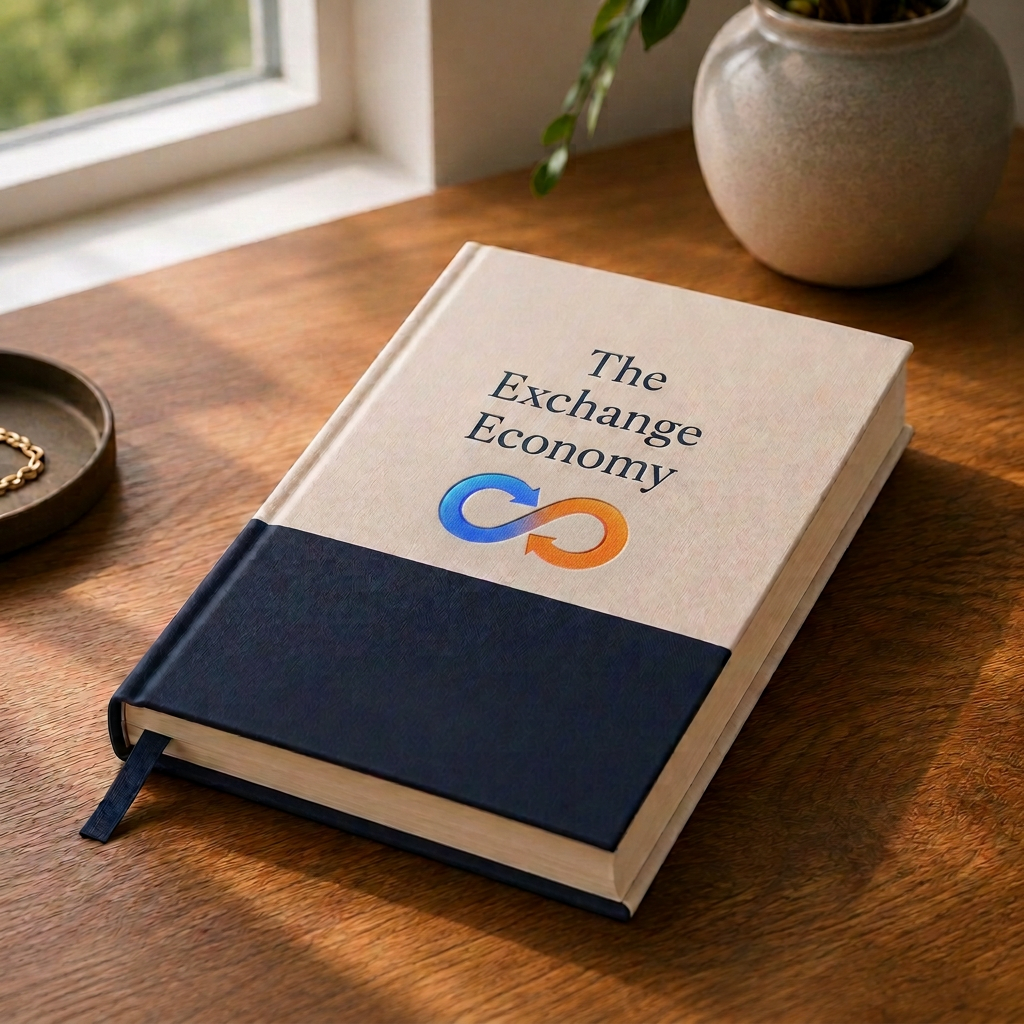
The Exchange Economy
The complete free guide to discovering the value that's already around you, in 13 chapters.
Read article — The Exchange EconomyGROWTH CENTER
Exchange & Value
Long before money sat in the middle of every transaction, people simply exchanged value.
By swapup · 3 min read

A neighbor repaired a fence in return for help bringing in a harvest. A craftsperson traded what they made for something their family needed. People shared time, knowledge, tools, food, and labor because each person had something useful—and no one had everything.
That is bartering: two people agreeing to exchange value directly.
It is one of the oldest economic ideas in the world. But it may also be one of the most relevant now.
People barter every day without always calling it bartering.
A photographer takes family portraits in exchange for landscaping. A designer builds a website while an accountant helps organize the books. A neighbor lends a trailer and receives help with a home project later.
The exchange may involve skills, services, items, access, knowledge, experiences, or time. What matters is not whether both sides give the same kind of thing. What matters is whether both people understand the agreement and believe the exchange is fair.
swapup Insight
Bartering was never outdated. It was waiting for a better way for the right people—and the value they already have—to find one another.
Many people are surrounded by value they cannot see.
It may be experience earned over twenty years. Equipment used twice a month. An open seat in a class. A professional skill. A spare hour. A place to stay. A gift for listening, teaching, repairing, organizing, creating, or connecting people.
At the same time, those people have needs, goals, and ideas that money alone may not solve.
The problem is often not a lack of value.
It is that the people holding complementary value have not found each other yet.
Technology can close that gap. It can help people discover what is nearby, understand what each person can offer, create a trusted agreement, and turn unused ability into real opportunity.
Bartering is an important part of the exchange economy—but it is not the whole of it, and swapup is not only a barter platform.
Value can move in different ways:
The purpose is not to remove money from every exchange. It is to stop treating money as the only value people possess.
The right exchange is the one both people understand, choose freely, and consider fair.
Most of us have been trained to begin with:
What can I afford?
The exchange economy invites another question:
What can I offer?
Maybe it is something you do professionally. Maybe it is something life taught you. Maybe it is an item, an introduction, an hour of help, or knowledge that feels ordinary only because you have carried it for so long.
You do not need to invent value before you can participate.
You need to recognize what is already in your hands.
When people exchange value directly, they do more than complete a transaction.
They meet. They learn what the other person can do. They build trust through a clear agreement and genuine follow-through. One exchange may lead to a friendship, a referral, a collaborator, a customer, a mentor, or an opportunity neither person expected.
And sometimes one person chooses to give freely—helping a neighbor, supporting a nonprofit, responding to a verified hardship need, or paying something forward with no need for recognition.
That is where exchange becomes community.
Money still matters. But it is only one way value moves.
Your skills matter. Your experience matters. Your time matters. Your ability to help matters.
The first exchange begins when you stop asking only what you lack—and start recognizing what you can bring.
A moment to reflect
What is one skill, item, experience, connection, or hour of your time that could be useful to someone else?
Start here
The complete free guide to discovering the value that's already around you, in 13 chapters.
Read article — The Exchange Economy
Exchange & value
Barter is bigger than trading one object for another. You may already have a skill, service, resource, or piece of knowledge that could solve a problem for someone else.
Read article — 15 Things You Didn’t Know You Could BarterSee how it works
How Exchanges Work
The four ways value can move: value for value, combined value, give freely, and pay directly.
See how it works